
About us
Our Purpose
Pain Points
- Limited public research funding – most research is done privately and protected by Intellectual Property
- Cost of production increase
- Declining effectiveness of Agri-chemicals
- Need for new talent
- Lack of training programmes for growers
- Environmental issues
- Declining water quality
- Soil health and erosion
- Biodiversity loss
- Future regulation of greenhouse gas emissions
- High energy consumption
- Climate change affecting weather patterns
Te Ahikawariki Provides the Solution
Te Ahikawariki/Vegetable Industry Centre of Excellence (VICE) is bringing together government, mana whenua, commercial vegetable growers, and researchers to fill this void.
By providing funding for research, extension, and upskilling of workers, as well as establishing the first working research farm in New Zealand, Te Ahikawariki is well placed to tackle the issues the vegetable industry is facing. The research farm, located in Pukekohe: the ‘vegetable basket of the North Island,’ will give the industry a central location to share valuable research insights with stakeholders nationwide.
Our Strategy
Applied Research
To facilitate research trials that demonstrate best practice in a commercial setting and with field conditions.
Grower Extension
A neutral space that allows growers to visit and view trial results and understand further steps and implications on their farm.
A strategy for extension that includes online resources for growers who aren’t able to visit the research farm.
People Capability
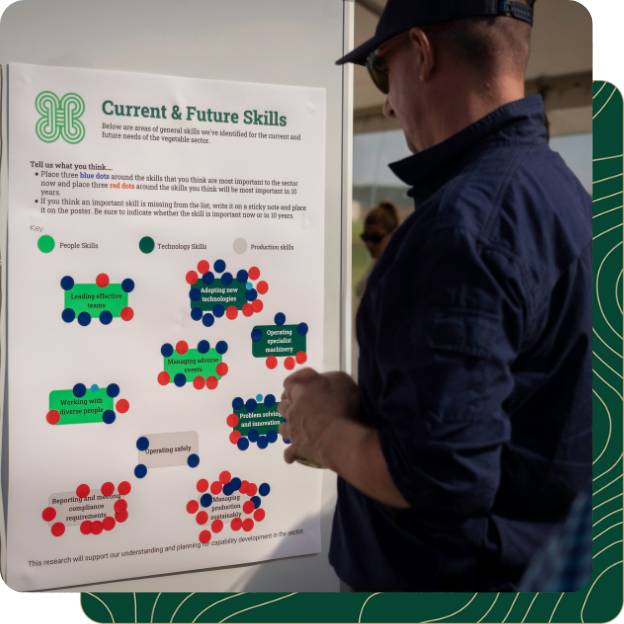
A touch point for those external to the vegetable sector to interact. Students and career changers can use this space, in collaboration with education providers to undergo training or practical modules.
Our Name
Meaning Behind the Name
Te Ahikawariki:
The Vegetable Industry Centre of Excellence
Te Ahi
Representing the fire that enables food to be cooked and to keep its peoples; Iwi and community warm and comfortable.
Te Ahika
Meaning the keepers of the fires burning, represents Manawhenua; in this instance of Ngati Te Ata maintaining its customs, traditions and tikanga within its takiwa (traditional rohe) in collaboration with its partners and joint initiatives.
Kawa
Is a ceremonial undertaking not only to remove tapu from a house (in this instance the National Centre of Research and Innovation so that the way is clear to carry out its mahi) but also calling on the powers to “ruruku” to draw and bind together, the uprights and rafters of the building (in this case to ensure the building is steadfast, fit for purpose and to co-ordinate the mahi to be done within).
Kawariki
Is a large-leaved plant “coprosoma grandifola” and was used to give to tamariki when they were sick to make them stronger, symbolising strength. Kawariki is most commonly associated with the response of King Tawhiao when he did not receive the co-operation, he sort to rebuild the social, cultural and economic order for his people following the 1860s military invasion, confiscations and ongoing pressures of colonisation. His often quoted stated by those of Waikato Tainui reflects this:
Māku anō tōku nei whare e hanga. Ko nga poupou o roto he māhoe, he patete, ko te tāhuhu he hīnau. Me whakatupu ki te hua o te rengarenga, me whakapakari ki te hua o te kawariki.
I shall build my house, the ridge-pole will be of hīnau and the supporting posts of māhoe and patatē. [My people] will be raised on rengarenga and strengthened on the fruit of the kawariki.
Ariki
Is a reference to a paramount chief. This could be in reference to a paramount chief of an Iwi , Waka or reflect those or something held in the highest regard. For example, the Kawariki plant or Maori children were also traditionally seen as chiefs, “tamariki rangatira”, hence they were known as tama-ariki. Ariki or rangatira exercising rangatiratanga included their ability to weave the people together in pursuit of their social, cultural and economic development as King Tawhiao sort to do. In this instance, ariki is about engaging with commitment, humility and respect to protect and enhance the environment, whilst further strengthen the cultural, social, and economic development of the people, region and country.
Governance and Management
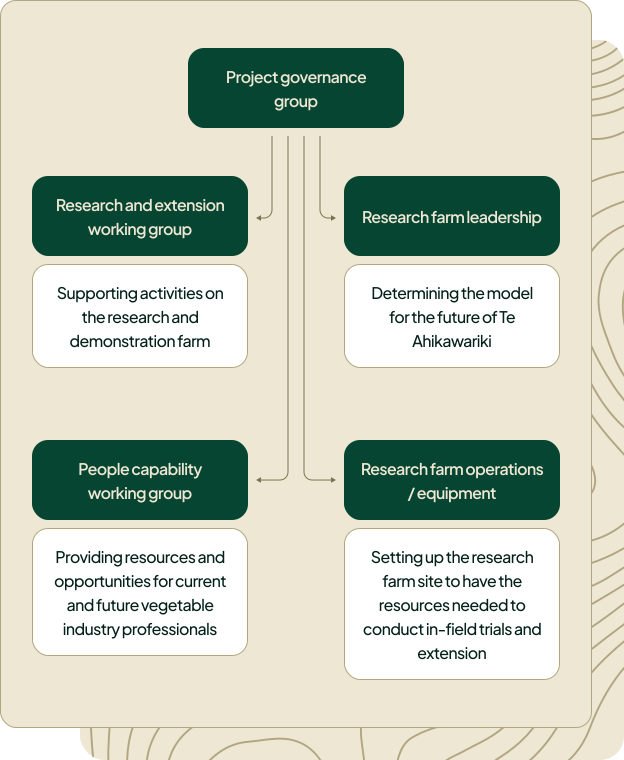
Project Governance Group
Carol Ward
Independent Chair
Paul Johnstone
Bioeconomy Science Institute
Brendan Balle
Balle Bros
Edith Tuhimata
Ngāti Tamaoho
Roimata Minhinnick
Ngāti Te Ata
Rangipipi Bennet
Ngāti Tiipa
Working Groups
Research and Extension
Management of the R&E funding application process, oversight of project portfolio, development of R&E strategy
People Capability
Sector workforce strategy and plan development, establishment of a university working group, development of teaching case studies, management of student scholarship application and approval process, development of grower capability fund
Research Farm Operations/Equipment
Development of working farm model, procurement of farm equipment, management of project activities on-site, contract management
Research Farm Leadership
Strategy development for the future of the project
Management
Kazi Talaska
Te Ahikawariki Project Lead, HESL
Emily Laskin
Research and Extension Lead, HESL
Daniel Sutton
Technical Advisor, Vegetables NZ
Howe Young
Research Farm Support, Balle Bros
Catherine James
Research Farm Manager, HESL
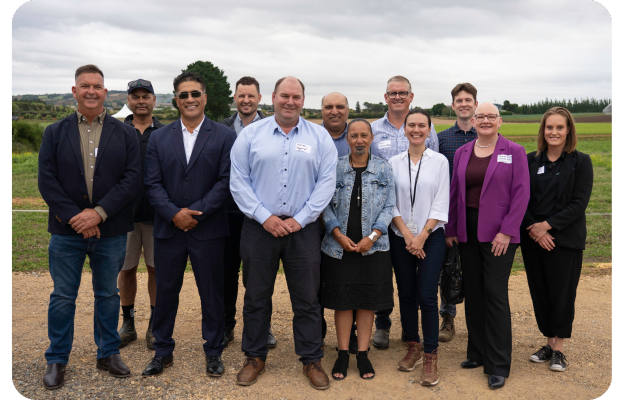
Te Ahikawariki Project Governance Group and Te Tautara Trust members with Minister Andrew Hoggard at the inaugural Vegetables Big Day Out.